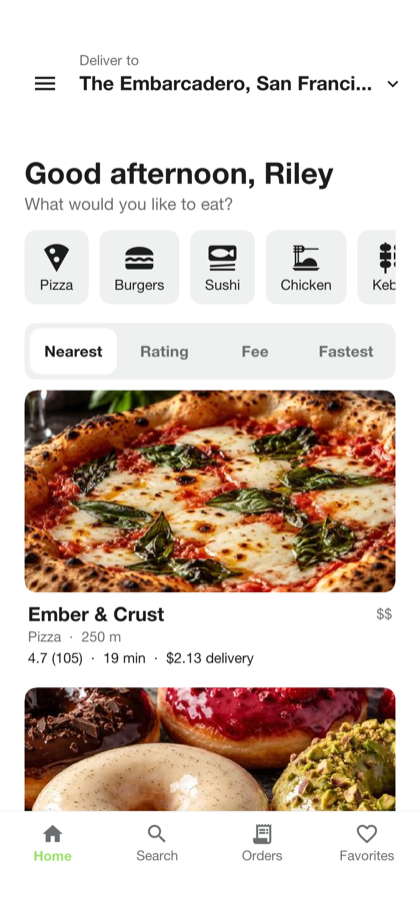
Food delivery
Savor
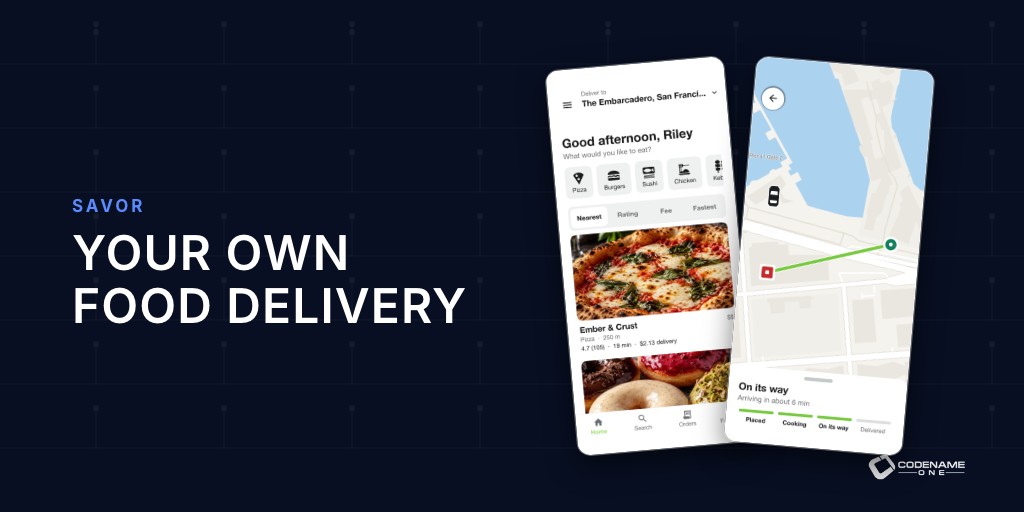
Customer, restaurant, courier and admin screens, with a Java backend for ordering, dispatch, tracking and payments.
Explore Savor →100% native. Fast.
Share Java from UI to server. Build native apps for phones and desktops, plus JavaScript for the web. Open source and free.
GPLv2 with the Classpath Exception. Free for commercial use. No royalties.
Form app = new Form(
    "Explore", new BorderLayout()
);

app.add(CENTER, buildContent());
app.add(SOUTH, buildTabs());
app.show();
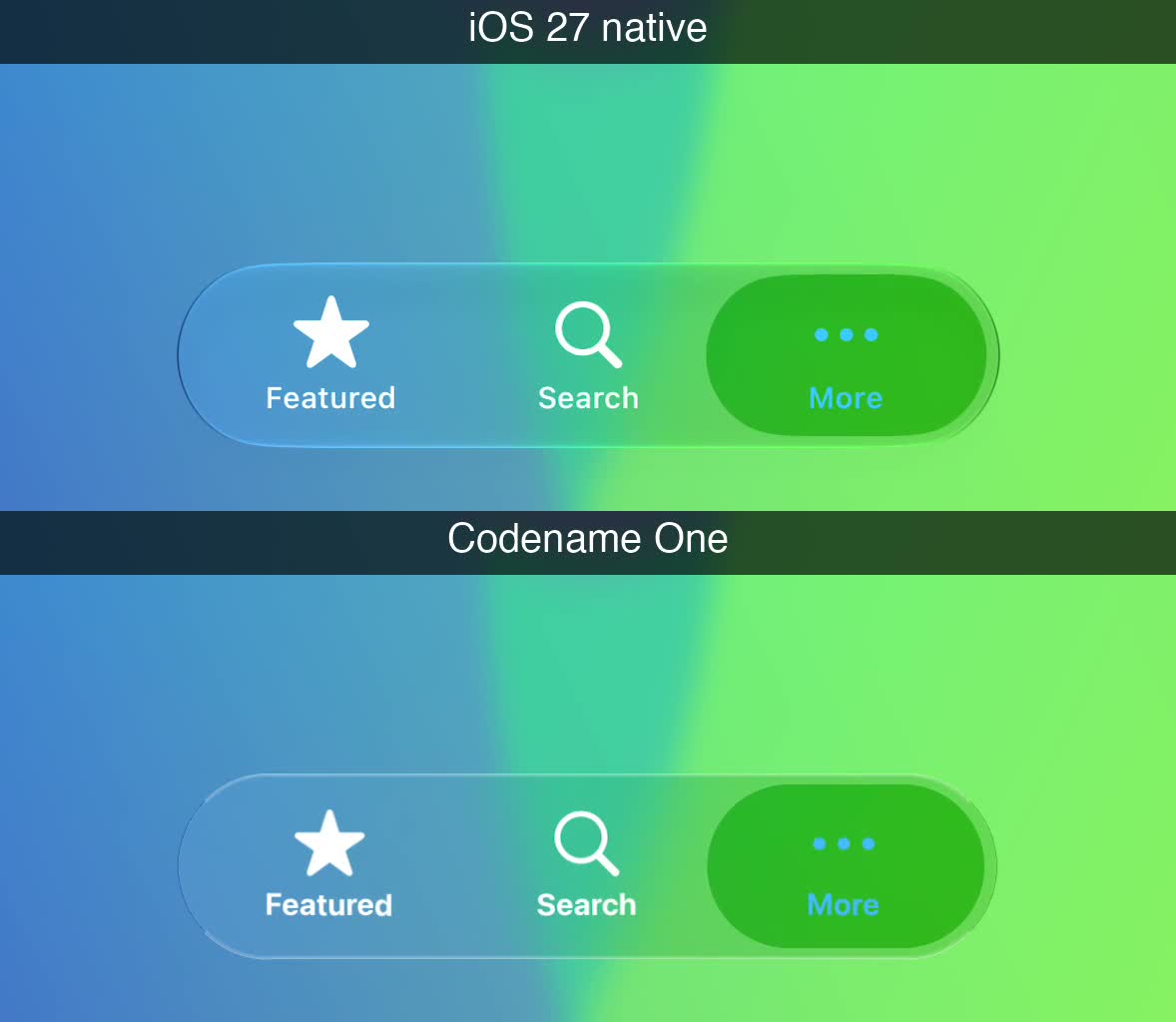
iOS 27 · UIKit above Codename One · 60 fps
Complete full-stack templates
Generate the Java client, backend, database and administration screens in one project. Run it, change the branding and build on the features already connected. Template source is free under MIT-0.
Food delivery
Customer, restaurant, courier and admin screens, with a Java backend for ordering, dispatch, tracking and payments.
Explore Savor →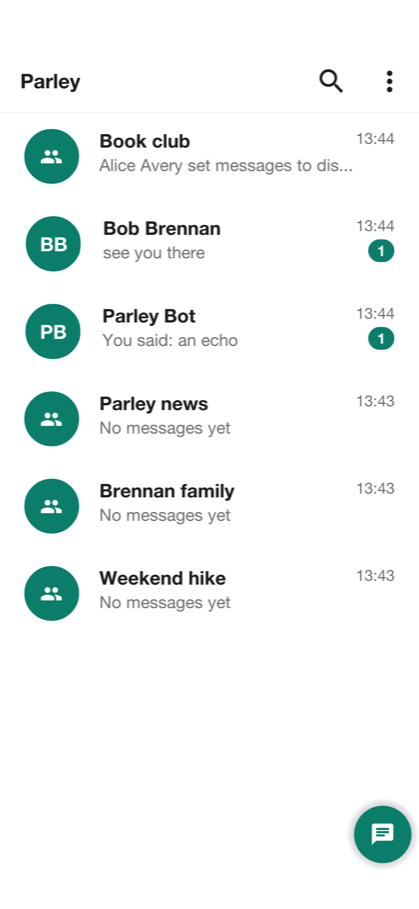
Private messaging
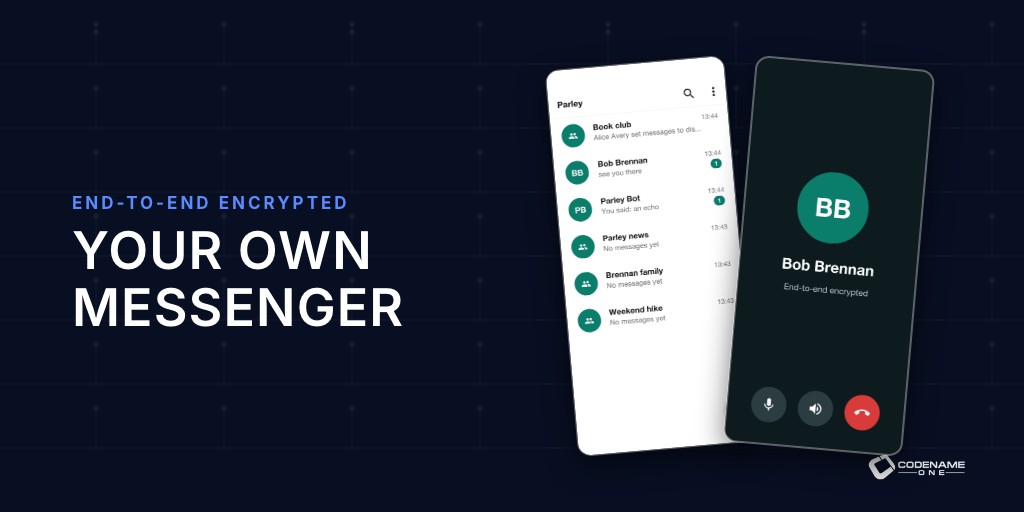
Chats, groups, voice and video calls, with a Java backend and an administration console.
Explore Parley →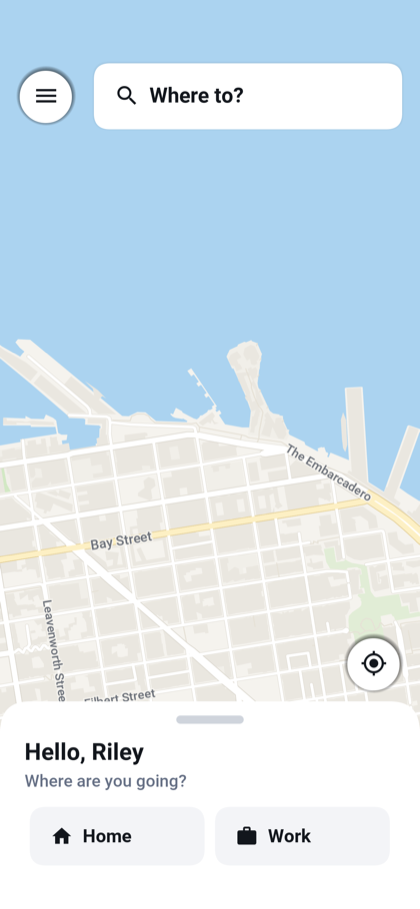
Ride hailing
Rider, driver and admin screens, with a Java backend for matching, live trips, earnings and payments.
Explore Wayline →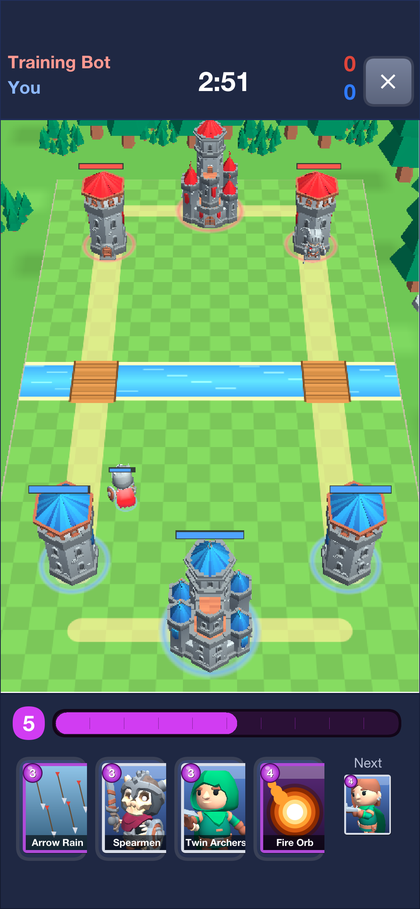
Multiplayer strategy
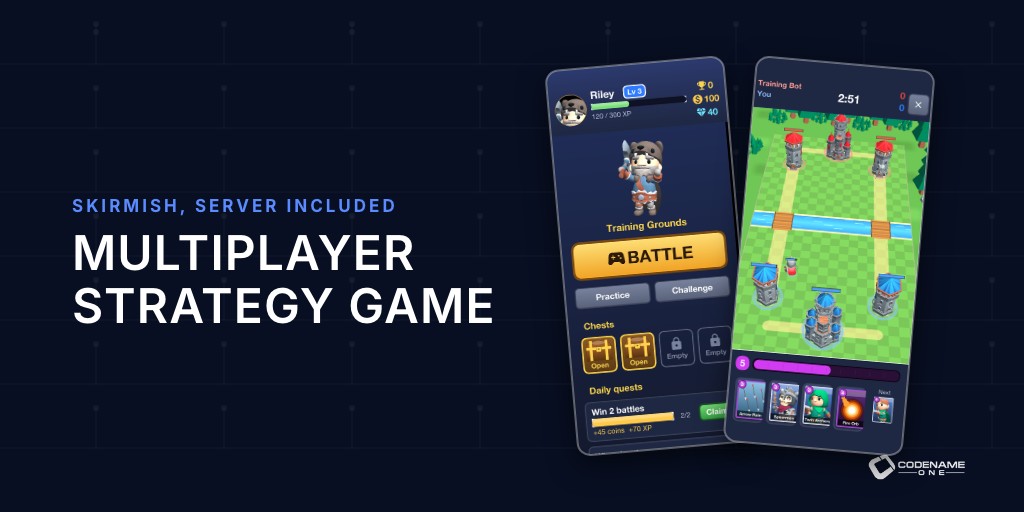
Online battles, replays and progression, with a Java game server and a moderation console.
Explore Skirmish →Choose your starting point
Start with the part you need. The app framework works with any backend, and the native backend can run on its own.
Write controllers, inject dependencies and use transactions. Compile the wiring into a native executable.
An evolving API with documented library support, not a drop-in Spring Boot replacement.
Build a native Java backend →Serve browser pages with compiled HTML views and htmx.
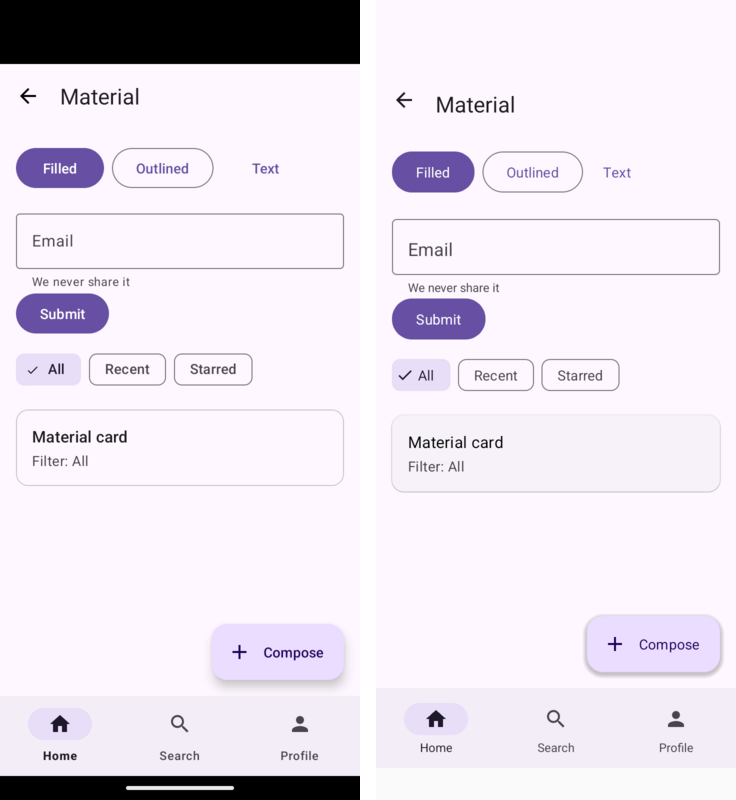
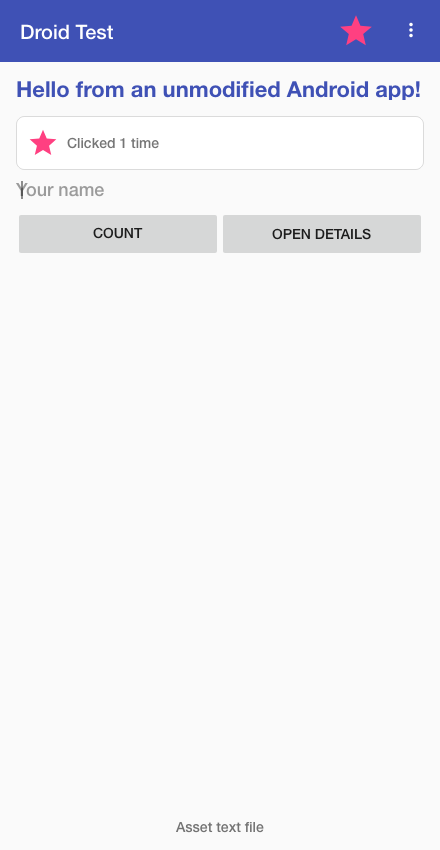
Bring Java or Kotlin activities, XML layouts and resources to iOS, desktop and the web.
Check your dependencies against the supported Android and AndroidX APIs.
Explore Android compatibility →Experimental imports: Flutter screens and Unity 2D games. Check the documented API and behavior limits before porting.
Share Java models and generate typed REST clients. Change the contract in one place.
See the shared-model example →Java modelsMeasured, with code you can run
Published reference results against HotSpot, Spring and Go. These are separate workloads, with their hardware, methodology and limits linked below.
ParparVM translating its own compiler also used 45.8% less peak memory in the Linux ARM64 Neoverse N2 baseline, across seven calibration runs. Generated files were identical. Allocation-heavy workloads can favor HotSpot.
Inspect every workload and machineSpring Boot 4.1.1 / JDK 25. Two pinned CPUs, Linux ARM64 VM on M4 Max, 32 connections, matched 60-second warmup.
HTTP handlers only: no database, TLS, authentication or generated controllers.
Reproduce the Spring comparisonTwo pinned cores, 64 connections, medians of three interleaved runs. Go used less memory and a smaller binary.
Compare throughput, startup and memoryOwn the result
Codename One draws its own components. The runtime and theme are packaged with the application, so an OS update does not silently swap in a different widget implementation.
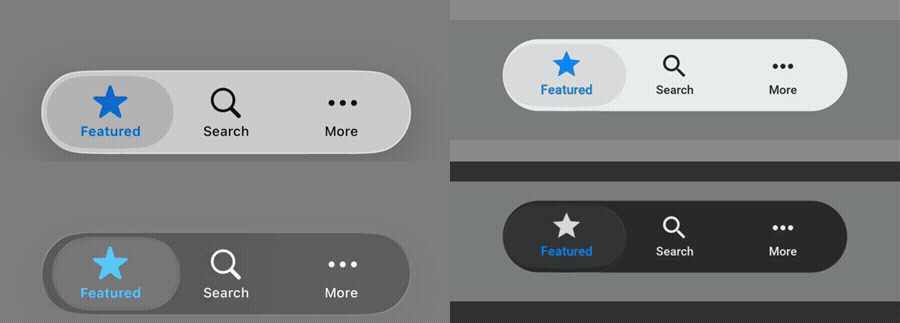
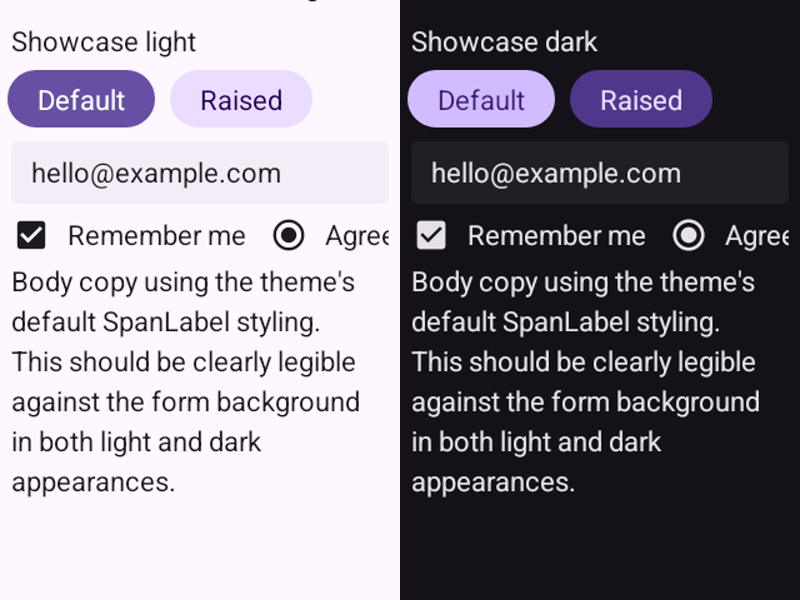
Theme the shared UI with CSS, draw directly when you need to, and keep brand behavior consistent across targets.
Fix shared application logic and UI once instead of maintaining separate screen implementations for each platform.
Call platform SDKs through native interfaces. Embed a map, web view, camera surface, or other heavyweight view with PeerComponent.
The build path
Use Maven or Gradle and your existing IDE. Codename One supplies the portable runtime, platform ports, and build tooling.
Keep your application logic, UI and optional backend in one project, with shared models where they help.
Start the projectThe simulator provides device skins, component and network inspectors, test recording, and live CSS.
See the development toolsGenerate platform projects or use the cloud service to build app-store binaries, including iOS builds without a Mac.
Submit your first native buildAgentic development
Generated projects include agent instructions. Connect Codex, Claude Code or another MCP host to inspect and operate the running simulator.
MCP also connects to native development builds on ports with server sockets, including Linux. Device connections need forwarding; release builds block access by default.
Deployment targets
Phones, desktops, browsers, watches and TV, with a native backend for the server. See Port Status for supported versions, architectures and test evidence.
Inspect every port and testEngineering notes
October 26, 2026
October 25, 2026
October 24, 2026
Start with the real thing
Generate a Maven project and build with your own tools, or use cloud builds for iOS without a Mac. A free account includes 100 cloud build credits each month.